Compare Villas
Home › Destinations › Amalfi Coast
Pastel houses stacked down the cliffs to a small beach on the Amalfi Coast — illustrative scene
Destination guide — checked July 2026

Amalfi Coast villa holidays: an honest comparison

The UNESCO-listed Costiera Amalfitana — for many, Italy's most famous coastline — is around 2¾ hours from London and every bit as beautiful as the photographs. It is also vertical, busy and short of parking — which is why this guide talks honestly about steps, traffic and ferries before it talks about lemon groves. The coast rewards people who lean into its rhythm; here's how to work out if that's you.

How we make money: some links on CompareVillas may become affiliate links that pay us a commission if you book. Commission never affects a score or a verdict. Full disclosure.

Who the Amalfi Coast suits Checked July 2026

Start with what the fame is built on, because it's all true. The Costiera Amalfitana has been a UNESCO World Heritage cultural landscape since 1997: a wall of mountains dropping into the Tyrrhenian Sea, with pastel towns, terraced lemon groves and a single ribbon of road — the SS163 — stitched along the cliff between them. Direct flights from London to Naples take roughly 2¾ hours, and from the airport you're on the coast in an afternoon. A villa terrace here, with that view, is one of the great places on earth to do absolutely nothing.

Who does it fit best?

Who does it suit less? Anyone for whom steps are a genuine problem rather than an inconvenience — the coast proper is a staircase with towns attached, and we say so plainly below. Toddler-and-buggy families will find the logistics harder than the brochures admit, though the Sorrento side softens almost every difficulty. And if your ideal villa holiday involves a hire car and easy, spontaneous driving, this is honestly the wrong coast: the SS163 crawls in summer and parking is scarce and metered. None of that is a reason to stay away — it's a reason to pick the right base, which is what the rest of this guide is for.

The five bases, compared Checked July 2026

Naples (NAP) is the main arrival airport for the coast, and there are two ways in: over the peninsula via Sorrento, or down the A3 to Salerno and along the coast from the east. (Salerno's small Costa d'Amalfi airport reopened in 2024, but its UK service has been thin — at our July 2026 check a seasonal Stansted route was the only London link, so treat it as a bonus rather than a plan.) Salerno matters more than most guides admit — its station takes Frecciarossa and Italo high-speed trains (Rome in about 1 hour 40 minutes), and its ferry dock is the eastern gateway to the coast. Transfer times below are typical pre-booked private-transfer times in normal traffic; summer Saturdays on the SS163 can stretch them well beyond.

Naples ✈ Sorrento Positano Praiano Amalfi Ravello Salerno Map data © OpenStreetMap contributors
The coast from Sorrento to Salerno, with Naples airport (blue) to the north — in season, ferries link the towns. Real coastline and locations from OpenStreetMap data © OpenStreetMap contributors — for orientation, not navigation.
Area What the setting gives you Transfer from Naples Buzz ↔ peace Steps & walkability Family fit Villa stock character
Positano The amphitheatre of pastel houses — the coast's defining view, beach clubs and boutique lanes below ~1½–2 h The glossiest scene on the coast; evenings hum until late The steepest base of all — expect staircases to everything, including your villa Older kids fine; buggies and little legs struggle Cliff-hung houses with terraces; small, coveted, view-first
Praiano & the middle coast The quieter perch between Positano and Amalfi; west-facing terraces catch the evening sun ~1½–2 h Village calm — a handful of restaurants, no scene to keep up with Still plenty of steps; fewer crowds on them Good for self-contained families who'll settle in Sea-view villas at slightly gentler prices than Positano; pools more common
Amalfi & Atrani The historic maritime town — cathedral, harbour and the coast's ferry hub, with tiny Atrani next door ~1½–2 h, or A3 to Salerno then ferry Busy by day with trippers; noticeably quieter after the last coach leaves Walkable at harbour level; villas up the Valle dei Mulini climb Good — most services, flattest core on the coast proper Townhouses and hillside villas; more practical, less postcard than Positano
Ravello A few hundred metres above the sea: gardens, long views and the Ravello Festival on Villa Rufolo's belvedere ~1½–2 h The most serene base on the coast — classical music, not cocktails The town itself is gently walkable; paths down to the coast are long stair descents Better for older children; the sea is a journey, not a stroll Garden villas and some of the coast's grandest houses
Sorrento & its peninsula The flatter gateway town facing the Bay of Naples — honestly not the Amalfi Coast proper, and easier for it ~1–1½ h; trains from Naples run in roughly an hour and a quarter A proper lively resort town with a year-round life of its own The flattest walking on this list by far The easiest family base in this guide The deepest villa stock in the region — gardens and pools around Sorrento, Sant'Agnello and Massa Lubrense

Transfer times are typical pre-booked private-transfer times from Naples Airport in normal traffic, checked July 2026 against transfer-company published times. SS163 traffic and the summer driving restrictions described below can stretch any road journey — plan generously.

Choose Positano if… Positano

…you want the postcard, and you're willing to pay for it in steps. Positano is the coast's glamour: the tumbling amphitheatre of houses, the beach clubs, the boutiques, the boats. Its villas are small in number, huge in demand, and almost all reached by staircases — sometimes a few dozen steps, sometimes a lot more, and your luggage makes the same journey. The honest test is simple: if reading that made you wince, look elsewhere; if it made you shrug, nowhere on this coast will make you happier.

Choose Praiano and the middle coast if… Mid-coast

…you want the same sea and the same light without the scene. Praiano sits on the quieter stretch between Positano and Amalfi, its west-facing terraces catching the evening sun, with a handful of good restaurants and no queue for any of them. The steps are still real, but the pace is a villa pace: swim, read, cook, watch the ferries go by. It suits second-time visitors especially — people who did Positano once and now know what they actually want.

Choose Amalfi and Atrani if… Amalfi

…you want the most practical base on the coast proper. Amalfi is a real town with a real history — its cathedral square and paper-mill valley remember a maritime republic — and, crucially, it's the ferry hub, which in summer makes it the best-connected doorstep on the coastline. It's busy with day-trippers until late afternoon, then exhales. Tiny Atrani, one cove east, offers the same convenience at half the volume. Villas at harbour level are rare; most climb the valley behind, so check the step count before you fall for a view.

Choose Ravello if… Ravello

…serenity is the point. Ravello sits a few hundred metres above the sea, and the climb buys you what the shoreline towns can't offer: space, gardens, cooler evening air and long silences. The Ravello Festival — running 4 July to 5 September in 2026 — stages concerts on Villa Rufolo's belvedere with the coast falling away behind the orchestra. The trade-off is the sea itself: reaching it means a drive, a bus or a long stair-path, so Ravello suits people whose perfect afternoon is a pool and a view rather than a beach.

Choose Sorrento and its peninsula if… Sorrento

…you want the region without the vertical living — and let's be honest about the geography: Sorrento faces the Bay of Naples on the far side of the peninsula, so it is not the Amalfi Coast proper. That's precisely its strength. It's flatter, closer to the airport, connected to Naples by rail, and its villa stock — around Sorrento, Sant'Agnello and out towards Massa Lubrense — is the deepest and most family-shaped in the region. You can day-trip to Positano by boat and come home to level streets. For first-timers with children, it's usually the right answer.

Steps, traffic and parking — the coast's honest trade-off

Every Amalfi villa brochure sells the view; few explain how the view works. Cliff villas earn their panoramas with staircases — check the step count and ask about porter help before booking, not after. The single coast road, the SS163, crawls in peak season, and in 2026 local ordinances apply an alternating number-plate scheme between Vietri sul Mare and Positano (10am–6pm; weekends and holidays in June–July, daily through August–September) that applies to hire cars too — verify the current rules before you plan to drive. Parking is scarce and metered almost everywhere. None of this is a flaw; it's how a medieval coastline copes with modern fame. The visitors who love it most are the ones who stop fighting it: arrive by transfer, move by ferry and on foot, and let the road belong to the buses.
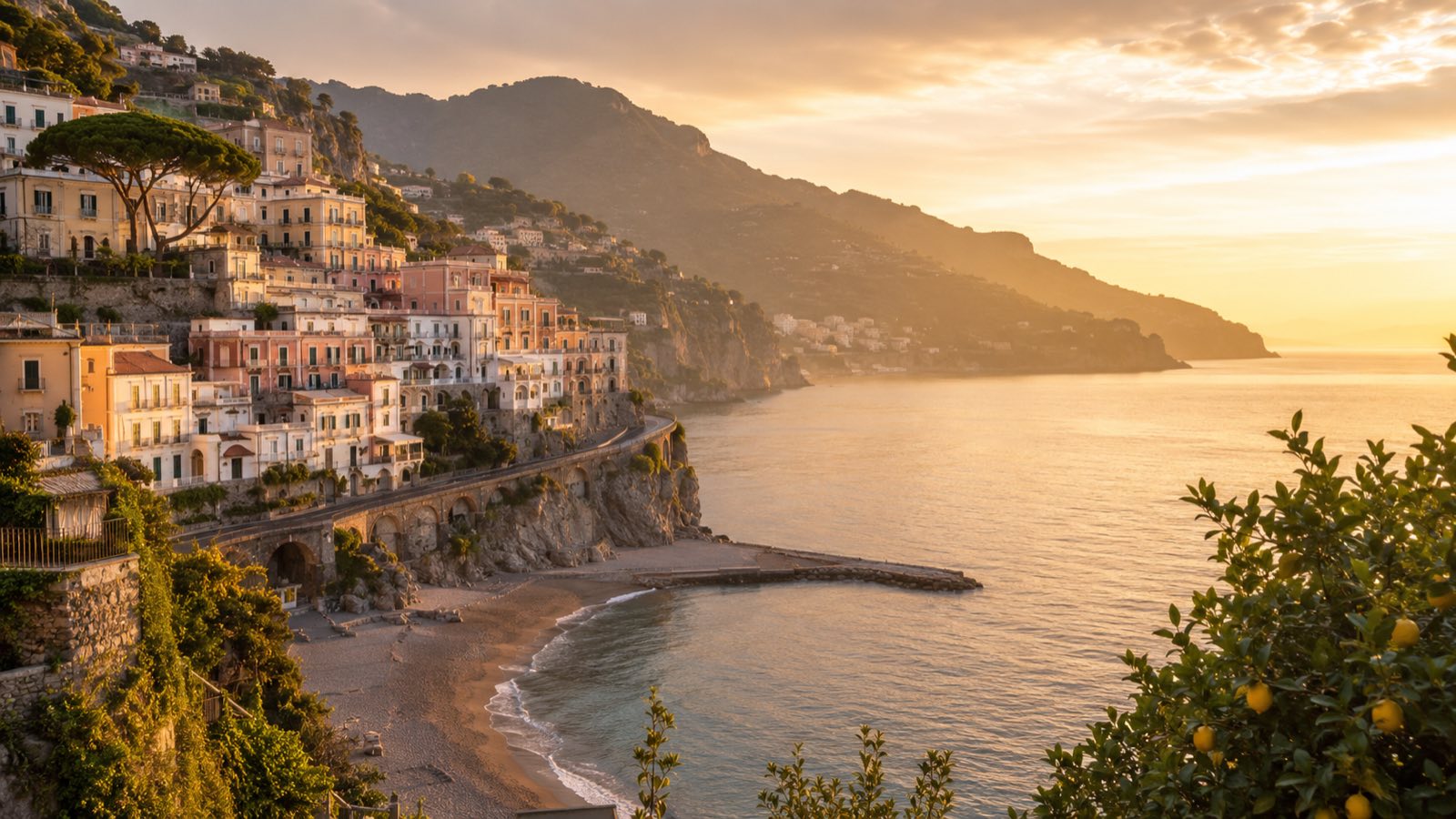
Pastel houses stacked down the cliffs to a small beach on the Amalfi Coast — illustrative scene
the golden rule

Base first, villa second

Pick the right area first, then shortlist villas inside it — that's the order this guide runs in.

Which villa companies operate on the Amalfi Coast Checked July 2026

Here's a fact the brochures won't volunteer: several of the UK's best-known villa specialists don't cover this coast at all — a telling sign of how tight genuine villa stock is on such a narrow, steep strip. We checked each company's own site in July 2026. Plain links to official sites; see the disclosure above.

Which? holiday-let provider survey, 2026; company coverage checked on each operator's official site, July 2026.

Live now (beta): Amalfi Coast villas in our villa finder

A first hand-checked cohort of Amalfi Coast villas is live in the villa finder — scored on the priorities you tick, with the working shown for every score and every unverified claim labelled. Every villa now carries independently measured walking distances — nearest beach access, restaurant, shop and pharmacy — from open map data.

Try the villa finder →

Amalfi Coast villa FAQs

Positano, Ravello or Sorrento — which base is right?

Ask what you want your evenings to feel like. Positano is the scene: beach clubs, boutiques and the coast's most photographed view, paid for in steps and crowds. Ravello, a few hundred metres up the hillside, is the opposite: gardens, concerts and long views in near-silence. Sorrento — honestly, not the Amalfi Coast proper but its flatter neighbour across the peninsula — is the practical pick: level streets, the shortest transfer, and trains and ferries on the doorstep. None of the three is better; they are three different holidays that happen to share a coastline.

How bad are the steps really?

Real, and worth taking seriously. The coast proper is a cliff face with towns attached, and most villas with the famous view sit above or below the road, reached by staircases — sometimes dozens of steps, sometimes a few hundred. Many operators note step counts and offer porter help on arrival; ask, and believe the answer. If anyone in your group has limited mobility or you're travelling with a buggy, either choose a villa checked for level access or base yourselves in flatter Sorrento. For everyone else, the steps are simply the price of the view — most guests decide within a day that it was a fair deal.

Do you need a car on the Amalfi Coast?

This is the rare destination where we say: often better without. The SS163 coast road crawls in summer, parking is scarce and metered nearly everywhere, and in 2026 local ordinances apply an alternating number-plate scheme between Vietri sul Mare and Positano from 10am to 6pm — on weekends and holidays in June and July, then daily through August and September — which catches rental cars too; check the current rules before you commit to driving. Ferries, the SITA bus and pre-booked drivers cover almost every journey a villa holiday needs. The exception is the Sorrento peninsula, where a car is more useful and less punishing.

When should you book an Amalfi Coast villa for summer?

Earlier than almost anywhere else we cover. The coast proper is a narrow strip with world-level fame and genuinely limited villa stock — several big UK operators don't cover it at all — so the villas that combine a real view, manageable steps and school-holiday dates go first. Specialist operators take bookings up to a year ahead, and choice thins sharply from spring. If your dates are fixed, book the villa before the flights.

Are the ferries reliable?

In season, they're the smartest way to move — and the best commute on the coast. Seasonal ferries link Salerno, Amalfi and Positano from roughly April to October, with Travelmar and others also calling at Vietri, Cetara, Maiori and Minori; Salerno to Amalfi takes about 40 minutes. Two honest caveats: they're seasonal, so a late-October week has fewer options, and they're weather-dependent — in rough seas sailings can be suspended at short notice. Build a plan B (bus or driver) into any day where missing the boat would matter.