How we make money: some links on CompareVillas may become affiliate links that pay us a commission if you book. Commission never affects a score or a verdict.
Full disclosure.
Who Croatia suits Checked July 2026
Start with what Croatia does better than almost anywhere the UK flies to: old stone. The signature villa here is a thick-walled stone house — a restored Istrian farmhouse among vines, or a Dalmatian captain's house above a pebble cove — with a pool where the courtyard used to be. Add water so clear it barely seems to be there, and flight times that undercut Greece: London to Pula takes roughly 2¼ hours, Split around 2½ and Dubrovnik about 2¾ to 3.
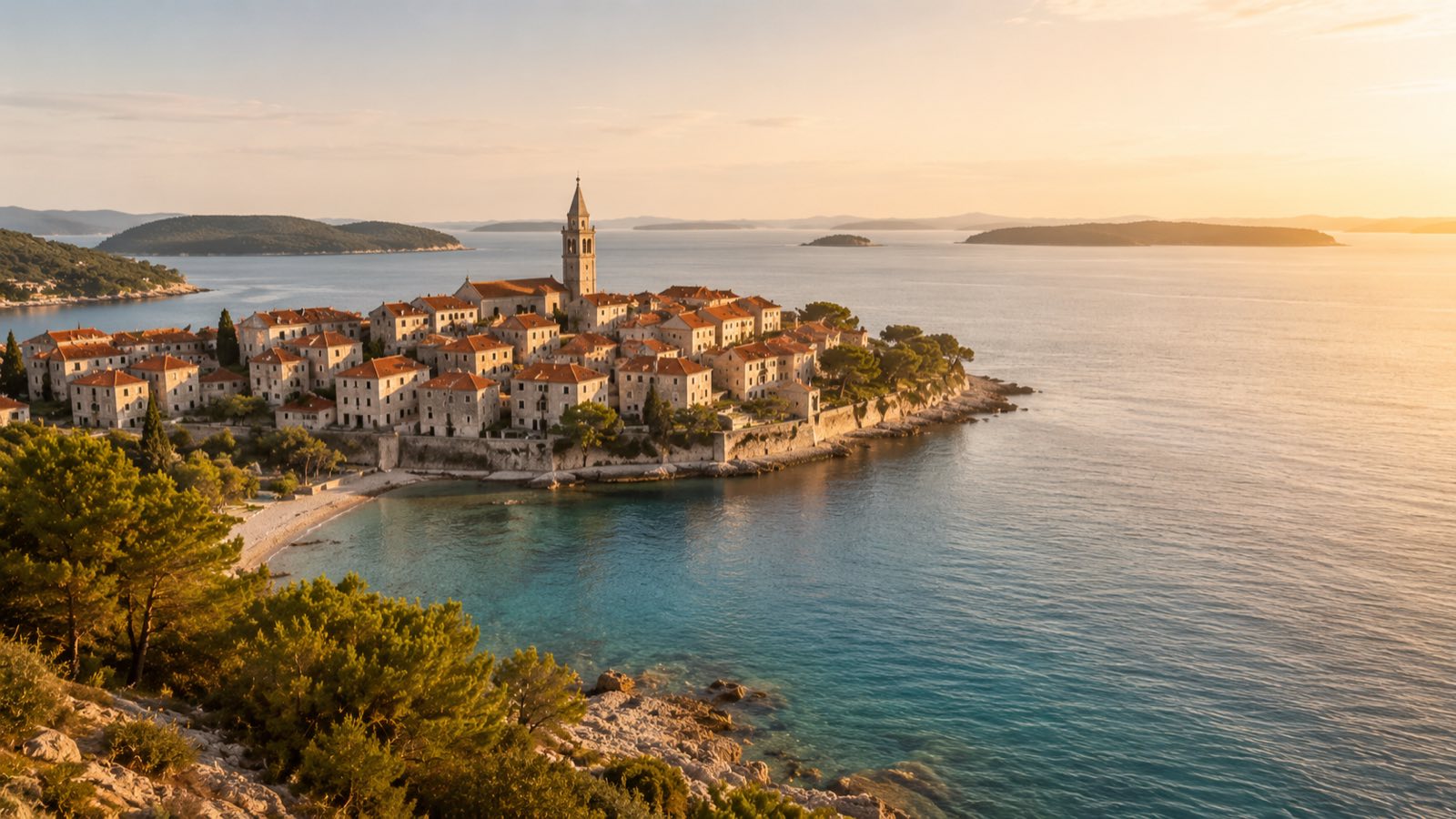
The two coasts are genuinely different holidays. Istria — the heart-shaped peninsula in the north, served by Pula — spent centuries under Venice, and it shows: campanile towers over Rovinj and Poreč, pasta and truffles on the menus, and a green interior of hill towns that feels closer to Tuscany than to a beach resort. Dalmatia — served by Split and Dubrovnik — is bonier and more dramatic: bare mountains dropping to a blue channel full of islands, Roman Split at its centre and walled Dubrovnik at its southern end.
Who does it fit best?
- Food-led couples and groups do brilliantly in Istria — truffle country with a calm Venetian coast, where the evening plan is a hill-town konoba, not a beach bar.
- Sightseers who want a base with a pool are Dalmatia's people: Split's Roman palace, Trogir's old island town and Dubrovnik's walls are all UNESCO-calibre days out from a villa terrace.
- Escape artists should look at the islands — a Brač or Hvar villa adds a ferry leg but buys the kind of seclusion the mainland coast can't.
- Swimmers get some of the clearest water in the Mediterranean — everywhere, on both coasts.
Who does it suit less? Anyone whose non-negotiable is a long sandy beach. Croatia's coast is overwhelmingly pebble and rock — more on that, plainly, below — so bucket-and-spade purists may be happier in the Algarve. And August around Split and Dubrovnik is properly busy: wonderful if you like a scene, worth timing around if you don't. Both are fit questions, not flaws — and fit is what this guide is for.
The five Croatias, compared Checked July 2026
Unlike a one-airport island, Croatia pairs each area with its own gateway — Pula for Istria, Split for central Dalmatia and the islands, Dubrovnik for the far south — and the two coasts are a long drive apart, so pick one and settle in. Transfer times below are typical driving times in normal traffic from the named airport; allow more in August, especially on the coastal road into Dubrovnik.
Choose the Istrian coast if… Istria · Coast
…you want the gentlest introduction to Croatia. Rovinj is one of the Adriatic's prettiest harbour towns — a Venetian campanile above a huddle of fishing-port lanes — and Poreč adds a UNESCO-listed basilica and a family-friendly promenade coast. Transfers from Pula are short at roughly 35 to 50 minutes, the sea is calm and clear, and the evenings are gelato-and-passeggiata paced. The honest trade-offs: the beaches are pebble, rock and lido platforms rather than sand, and the coastal villa stock leans modern rather than romantic — the famous old stone sits a few kilometres inland.
Choose the Istrian interior if… Istria · Interior
…the villa is the holiday and dinner is the itinerary. This is truffle country: Motovun stacked on its vineyard hill, Grožnjan given over to artists' studios, and between them a green landscape of oak woods and wine roads that draws the Tuscany comparison honestly. The stone-farmhouse stock here is Croatia's best answer to the Mallorcan finca — thick walls, pools, views, privacy. The deal to make with open eyes: there is no beach on the doorstep. The coast is a drive away, every restaurant is a drive away, and for the right group that's precisely the point.
Choose Split, Trogir and the riviera if… Dalmatia · Split
…you want the most Croatia per day. Split is a living Roman city — Diocletian's Palace is its high street, not a museum — Trogir is a miniature walled town ten to fifteen minutes from the airport runway, and the ferries fan out to the islands from the harbour. Villa stock climbs the hills behind the coast with big channel views. The trade-offs are the flip side of the energy: town beaches are pebbly and busy in season, August traffic is real, and if peace is the priority you'll want the islands or Istria instead.
Choose Brač or Hvar if… Dalmatia · Islands
…seclusion beats convenience. An island villa is a different rhythm: ferry across, unpack, and let the mainland get on without you. Brač is the practical choice — the Supetar car ferry from Split takes about 50 minutes and runs frequently — with quiet stone villages and the famous pebble spit at Bol. Hvar is the glamorous one: lavender hills, a yacht-filled harbour town reached by foot-passenger catamaran in around an hour, or a roughly two-hour car ferry to Stari Grad at the island's quieter end. The honest catch is logistics: August car-ferry queues, last-sailing times and the extra leg after a flight all need planning.
Choose Dubrovnik and the far south if… Dalmatia · South
…one of Europe's great walled cities is worth building a week around. From a villa in Cavtat, the Konavle valley or the hills south of the city, you get the walls, the marble streets and the Game of Thrones backdrops on your own schedule — early, late, or out of season — with pebble coves and rock-ledge swimming in between. The trade-offs: this is the longest flight of the three (about 2¾ to 3 hours), the coast is steep enough that walkability varies villa by villa, and the old town at August midday is an experience best planned around, as the FAQ below explains.
The pebble question — Croatia's honest trade-off
Here is the sentence too many villa listings skip: Croatia's beaches are overwhelmingly pebble and rock. Smooth white stones, slabs, bathing ladders and the occasional concrete lido — genuinely sandy beaches are rare enough that guidebooks name them individually, and none of the areas in this guide is built around one. Even Bol's celebrated spit on Brač is fine pebble, not sand. None of this is a reason to stay away — it's the reason the water is so astonishingly clear, because there's no sand churn — but it changes what you pack and who it suits. Swim shoes for everyone, especially children, turn the problem into a footnote. If a long barefoot sandy beach is the non-negotiable heart of your holiday, Croatia will frustrate you — and we'd rather say so here than have you discover it poolside.